
 Download plain text
Alexander Funck Bd. 1 (1748–1753)
Data quality
- The transcription has not been fully proofread and may contain OCR errors.
- Place names in the text have not been systematically marked.
- Marked places may not yet be linked to coordinates in the gazetteer.
- Illustrations may be incomplete or not yet reviewed.
- This volume has not been editorially approved for publication.
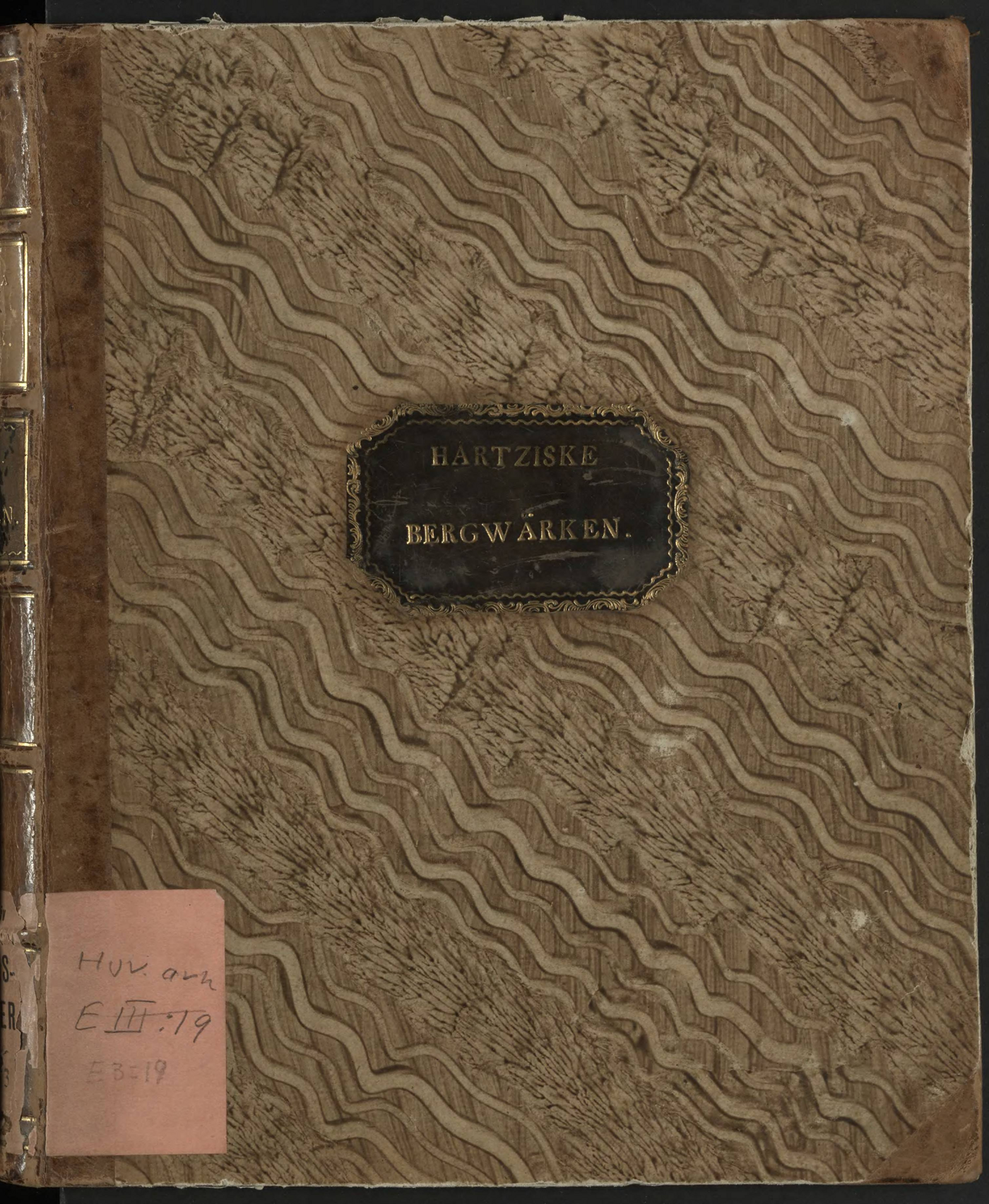
This report was compiled by Alexander Funck (1716–1797), one of the most accomplished Swedish mining officials of the eighteenth century. Trained within Bergskollegium and closely associated with the influential mining expert Daniel Tilas, Funck combined practical experience of Swedish mining with a strong interest in geological observation and mine engineering. Before undertaking the journey documented in this manuscript, he had already carried out investigations of mining districts in Sweden and Norway, and he would later serve as bergmästare and bergsråd. His extensive travels between 1748 and 1753 through Germany and Central Europe formed part of a broader effort to collect foreign mining knowledge for the Swedish state.
The present volume is devoted primarily to the mining districts of the Harz Mountains. Unlike many contemporary travel accounts, however, it is conceived not as a chronological narrative but as a systematic study of mining practice. In a lengthy introductory essay, Funck reflects on the importance of direct underground observation and argues that practical mining knowledge cannot be acquired from books alone. The manuscript therefore combines theoretical discussion with detailed descriptions of mines, ore deposits, mining methods and administrative institutions.
The report differs significantly from earlier Bergskollegium travel accounts. Edmund Gripenhielm's journey around 1700 was largely concerned with describing foreign mining regions and the technologies employed within them, while Henric Kalmeter's reports combined mining observations with broader investigations of manufactures, trade and economic organisation. Funck's manuscript is much more narrowly focused. Its principal concern is not industry or commerce, but the geology of ore deposits, the structure of mining fields, the organisation of underground work, and the relationship between ore bodies and mining methods. Throughout the report, foreign mining districts serve less as objects of description than as case studies from which general principles may be derived.
A substantial portion of the report concerns the great mining districts of Rammelsberg, Clausthal, Zellerfeld, Lautenthal, Andreasberg and Lauterberg. Funck describes ore deposits containing silver, lead, copper, cobalt, zinc and bismuth, paying particular attention to the geological character of veins and lodes, their structure, intersections, displacements and changes in richness. He discusses mining methods, drainage systems, pumping machinery, timbering, shaft construction and the organisation of underground work in exceptional detail.
A distinctive feature of the manuscript is its concern with mine architecture and underground engineering. Funck analyses different systems of strossenbau and fürstenbau, compares alternative methods of supporting excavations, and explains the use of mine fillings, vaulting, drainage adits and pumping systems. Numerous sections are devoted to the relationship between geological conditions and mining strategy, making the volume an important source not only for the history of mining technology but also for eighteenth-century approaches to economic geology.
The report also contains extensive observations on ore dressing, smelting and metallurgy. Funck describes the treatment of complex lead and copper ores, roasting methods, silver extraction, sulphur recovery, vitriol production, brass manufacture and ironworking. Alongside these technical discussions, he records mine finances, production statistics, labour organisation, Bergamt administration, taxation and the management of mining companies. Particularly valuable are the numerous tables tracing the fortunes of individual mines over long periods, illustrating the fluctuating conditions of the Harz mining industry.
Unlike the reports of Gripenhielm and Kalmeter, this manuscript repeatedly moves from observation to analysis. Funck reflects on why mines prospered or declined, compares competing methods of mine management, evaluates the effectiveness of drainage systems and support structures, and comments on the geological assumptions underlying mining decisions. The result is a text that approaches the character of a mining treatise rather than a conventional travel report.
Its significance therefore lies not only in the detailed information it provides about the Harz mining districts in the mid-eighteenth century, but also in what it reveals about the development of Swedish mining science. Whereas earlier travellers primarily gathered information abroad, Funck sought to transform practical observations into general knowledge about ore deposits, mining methods and underground engineering. The manuscript thus marks a transition from the descriptive travel report to the analytical and comparative study of mining as a scientific discipline.